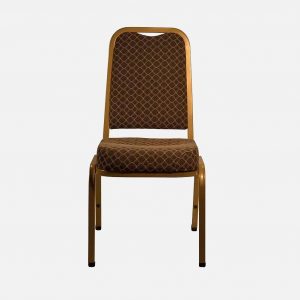
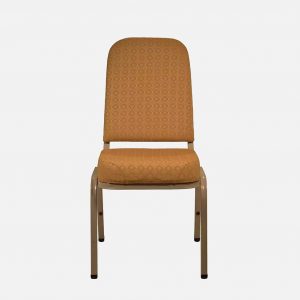
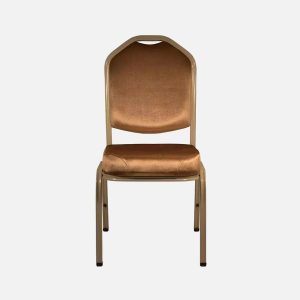
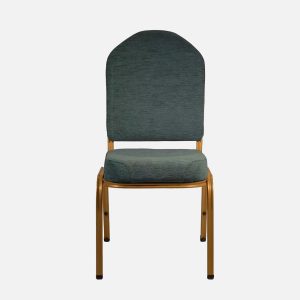
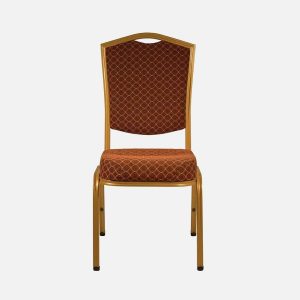
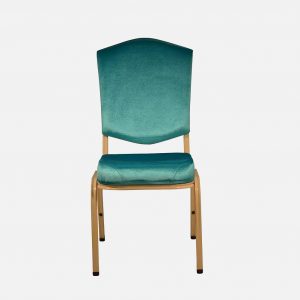
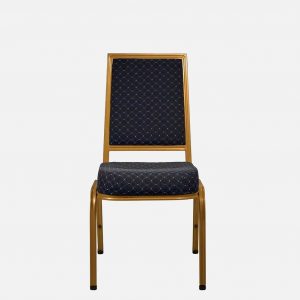
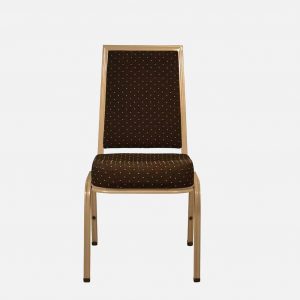
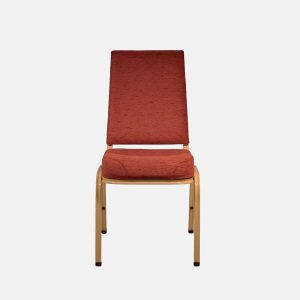
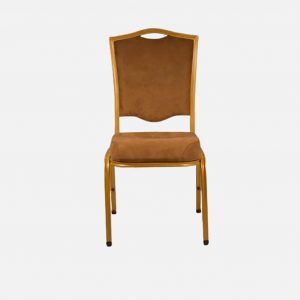
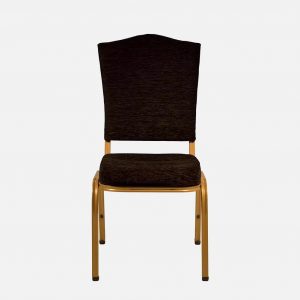
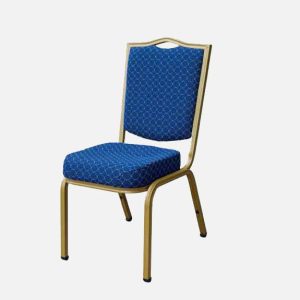
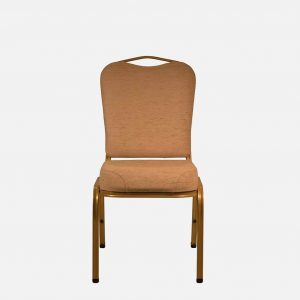
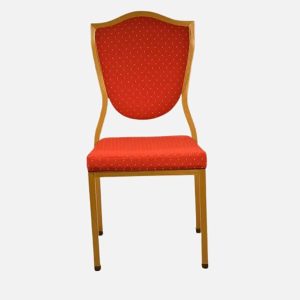
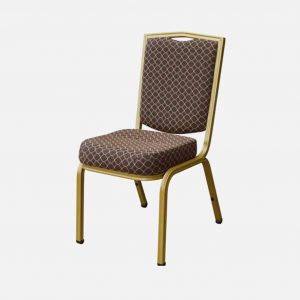
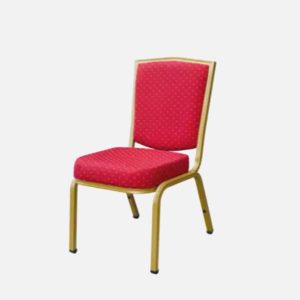
Weight is the whole argument. A hall that resets daily moves these by hand without a second person, and a full trolley clears a room in far fewer trips than a steel range. Frames are welded and powder-coated rather than plated, so scuffs from stacking never show as bare metal.
Seats are 80 mm foam over an OSB base, upholstered in any fabric from our range, with frames finished in any RAL colour — the two decisions that make a chair match a room.
The same designs come on a steel frame at a lower unit cost: see metal banquet chairs. Trolleys and linking devices are under trolleys and accessories.
Read stack heights, weights and storage before deciding how many you need.
Two kilos sounds small until it is multiplied. A venue resetting a 300-cover room twice a week moves 600 chairs; on the aluminium frame that is 1,200 kg less lifted every week, by the same crew, for the same wage. That is the whole case for the higher unit price.
Beyond weight the two ranges are the same chair: identical seat height, identical stacking geometry, the same fabric and RAL frame options. If the room stays set between events, the metal range does the same job for less. If it does not, this is the range.